Thursday, January 19, 2017

Google Soul


         We gave you faster internet, google glasses, and a great navigation system. Now, we're here to change the medical world entirely. Do you have a friend of family member who is on the Asperger's syndrome? Do you simply have trouble reading people's emotions? Or are you just curious about the world around you? No matter the situation Google Soul is here for you. Google Soul comes in three different models: MD Google Soul, Google Soul 1, and Google Soul Xtreme.
          MD Google Soul is sold with a prescription only. Specially designed to help children and young adults who have Asperger's syndrome. WHen being worn the glasses use a special facial reading device to pick up the emotion of people around it and relay that information the the wearer. The glasses then use this information to give the wearer hints on how to interact with each person and keeps them updated on social cues. The glasses work with the wearer to figure how they learn est and what they need the most help with. With a prescription these glasses can be bought at your local pharmacy for $2,500.
          Google Soul 1s are the most basic and affordable of the glasses, for just $1,500. Google Soul 1 allow the wearer to see basic emotions (love, hate, happiness, despair, and anger) and who the emotions are directed towards. The emotions are shown by coloring in peach person with each colors designated color (love-pink, hate-red, happiness-yellow, despair-blue, and anger-black) and a thin line drawn to who they are feeling the emotion towards.
          Google Soul Xtreme has all the same features of Google Soul 1, but with every emotion you can think of mixed in for just $2,000. Instead of each person simply being colored in one color they show many different emotions (each one labeled). In order to keep this from getting to confusing when the glasses are first put on they appear the same as Google Soul 1, but by focusing in on one person all of the new features can be shown.
          Google Soul 1, MD Google Soul, and Google Soul Xtreme come in a red, black, deep blue, or marbled and in a variety of styles. Don't hesitate to buy yours at your local pharmacy now!

Tuesday, January 17, 2017

Dekard

After watching this movie I was left with onr question: was Dekard a replicant? First, as a disclosure, I missed like a good 45% of this movie cause I was called out of class (Me. Bergeron and I are sorta related apparently!), so I don't have all of the info.

I personally think that Dekard is a replicant for these reasons:
1) We don't see anything about his life before the movie.
          Replicants are given memories of other people, so him remembering was he used to so would make sense, but in order to prove that he's human we would need to see real memories.
2) The unicorn
          The only way people would know about his dreams is if he was a replicant.
3) He has one purpose
          The replicants are made for one purpose and one purpose only (though it varies for replicant to replicant) and Dekard Dekard is only shown to do one thing--fight replicants.
4) Dekard shows little to no emotions
          Dekard-as with many replicants can't show emotion and when he does it seems forced and doesn't appear to make sense.

Also I just want to mention how touching the replicants speech was at the end about how he needs to know how it feels to live in constant fear. He manages to humanize the replicants.

Thursday, December 1, 2016

The Turning Point

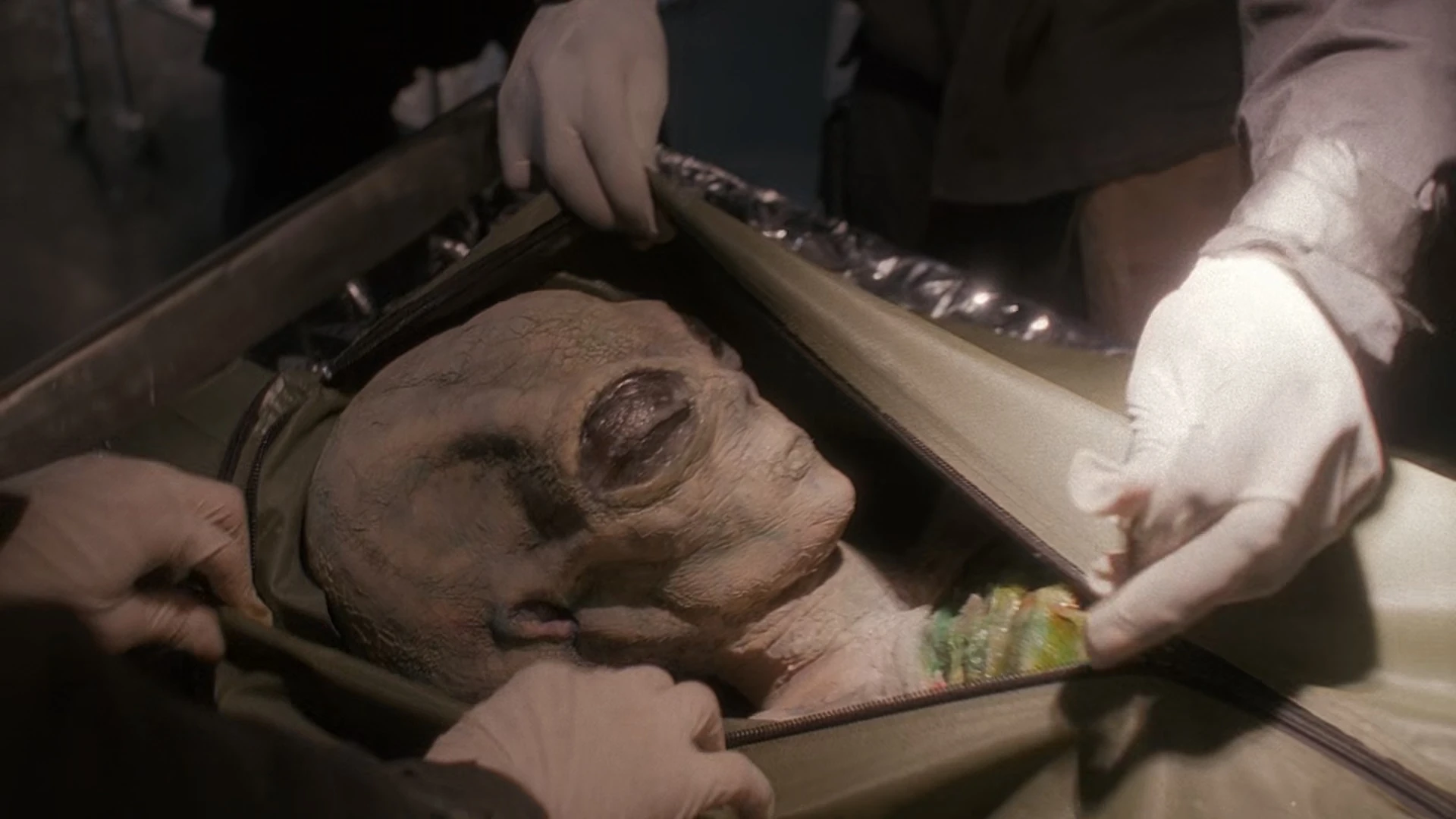
As I stated in my last blog post I don't quite get the hype behind The X-Files, but I do think there is something to be said for the third season. Since I only watched the the third season in full and quick overviews of the first two seasons I can't be sure of this, but it seems to me that the third season marks where the X-files really becomes the X-files everybody today loves.

In the overviews of the first two seasons the show seems to skip around a lot and not have a solid plotline. If this youtuber, N3RD, is able to totally summarize the first two seasons in detail in about 3 minutes each it shows that it isn't that complicated with a solid plotline. In season 3 there is a solid plotline with semi in depth charaters, I have trouble following it, but it is there. In this seaason we get more of a look at the charaters' families, such as Scully's mom and sister, while in the first two seasons mainly what we see is a sister (who turns out to be an alien clone). In the season you can follow what is happening and who the characters are, whereas the fist two seasons have more of a "monster of the week" feel.

To help my understanding of the show I watched the last episode of season 2. In this last episode it seems like the end of a season, like the story can end there. The last scene is "the cigarette smoking man" burning Mulder in a boxcar. I think that this was the sceenwriters allowing the series to start all over again. This continues in the first episode of the 3rd season, which, if shown separately, could be the beginning of a new season. Everything from the past seasons that you need to known is covered within the first episode and you can easily catch on. I think that the writers realized that the first two seasons weren't what watchers wanted, so they allowed it to be reborn.

I think that season 3 allowed to series to start over and become a show that was pone of a kind in the 90's. It was a sci-fi that wasn't totally heavy science and even followed the plotline of another story, Sherlock. While I don't particuraly enjoy the series I do appretiate it for what it is, a ground breaking science fiction show, and I believe that that all started in season 3.

Tuesday, November 29, 2016

X-files--sci-fi or just fiction?

   I think that the X-files slips in between science fiction and fiction throughout season 3, but for the most part it's fantasy. I think it scratches the border of science fiction. During the season  they discover many supernatural things, such as aliens, but they never really take it into the science aspect. For the most part they try to dive into "why aliens?" or like "what is happening and why?" but a big part of the series is that it is never really answered. By trying to create cliff hangers I feel like they are actually taking away from the science aspect of the show.
   I feel like the science aspect of this is a missed opportunity. They could make the show so cool if they explained more advanced technology that the aliens had. Or if they had just gone more in depth to any of the science they mentioned in the show. I know I might get a lot of backlash from saying this, but I don't get all the hype around this show. I see all the potential this show could have had, but I've just had trouble getting into it. I don't see the show as having a strong plot line and I really have trouble getting attached to the characters, and I feel like I don't have much to say about it even after watching almost an entire season. Overall I don't think that it is a bad show by any stretch of the imagination, I just don't see why it had such a following.

Wednesday, November 2, 2016

Chekov--The real ladies man

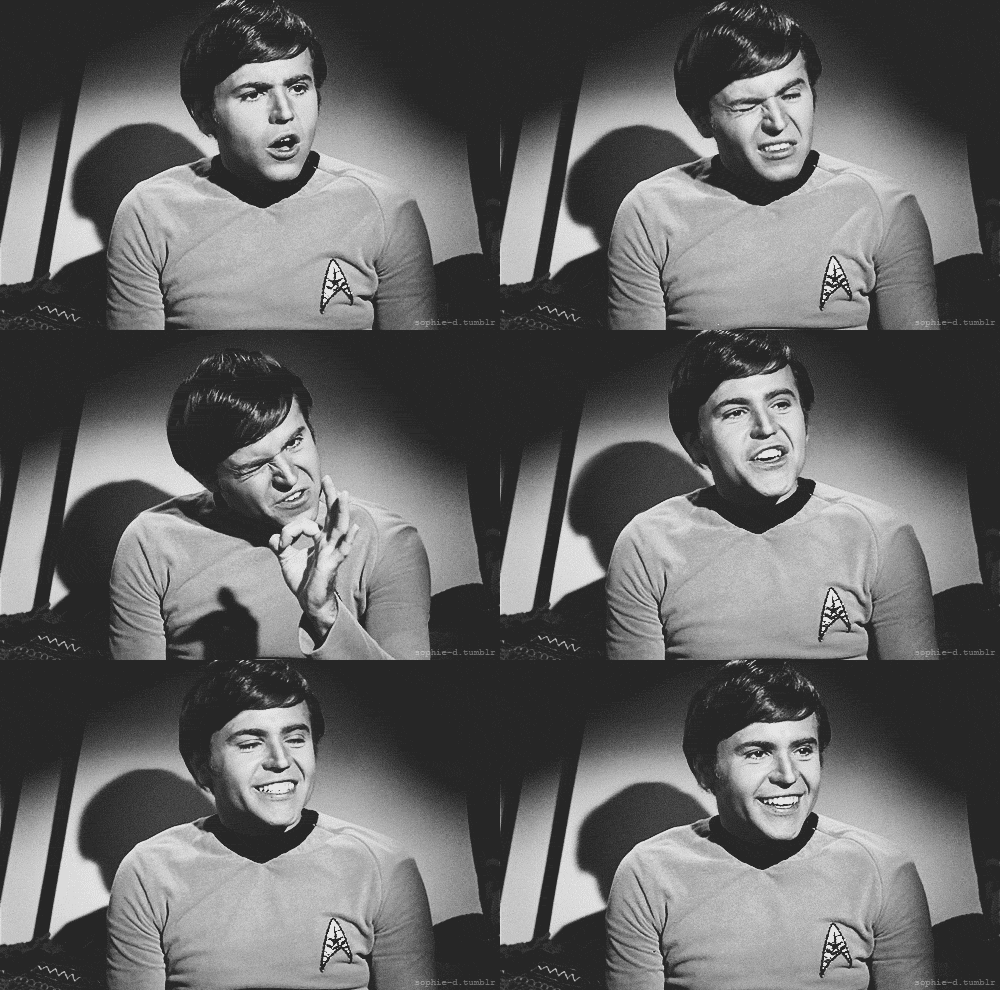
Chekov was put on the show to appeal to a younger audience, but from our discussion in class it appears most people don't see him as a real catch anymore, but I'm here to argue that he still is (both in the original and reboot). Here are some reasons why Chekov is a well done and perfect heart throb:

1) He isn't a stereotypical manly man, but he still fights for what he believes in. 
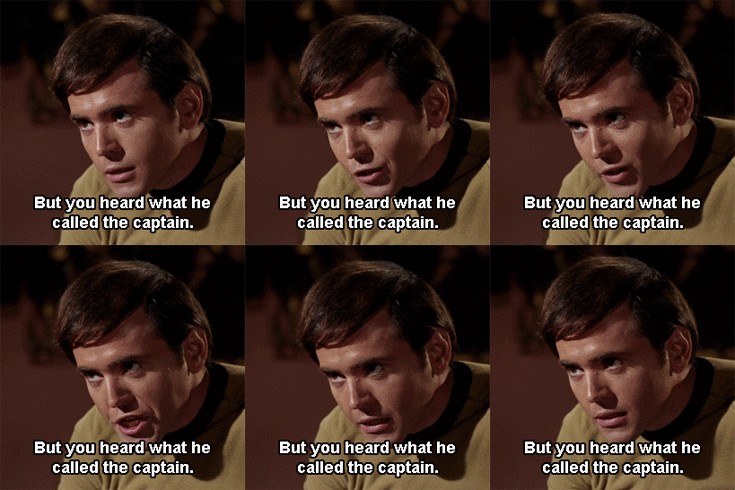
Chekov isn't overly manly like Kirk. He doesn't have the constant need to prove that he is the best and strongest and knows when to step down. But he is willing to step up and fight for what (or who) he believes in--as we see when the klingons start to talk trash about Kirk.


2) The power
I think that since the Enterprise is like the police force of the future their stature would have the same alluring power that police have on many girls today. It is no secret that many girls today find "a man in uniform" way more attractive than they would be without the job, so I think it is logical to say that this would apply to Chekov in the future.
3) He's young
Since Chekov is so young he appeals to the younger audiences who want a guy closer to their age instead of a guy closer to 40. 

4)The accent
Accents are great, they give a person something different, something new, and with his heavy russian accent Chekov perfectly fits the bill.
5)He's adorable
Enough said.
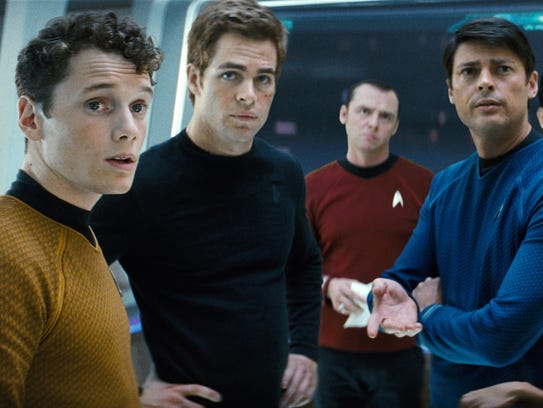
The only one who can come even close to comparing to Chekov is Chris Pine as Kirk


Wednesday, October 26, 2016

Psychology in the Frozen Journey

     I think the difference in the Victor Kemmings' views of the past in the Frozen Journey are interesting because of how vastly different they are while both still being entirely possible.
     In the beginning of the Frozen Journey Kemmings has a very positive view of the past, remembering only the best parts. In psychology this is called rosy retrospection, basically meaning that you remember and talk events from the past more favorably than they actually were. Later he remembers everything that went wrong and it taints his memories (the house falls about and the whole memory becomes dramatically depressing). Both of these ways of recalling memories are recognized in psychology.
     Right now psychologists aren't totally sure what causes these ways of remembering memories, but one main theory has to do with implicit theories. They believe that before an event happens you decided how it might turn out (think a spring break trip you think will be awesome) and with this idea in mind when you look back at the event you fail to recall the neutral moment and only remember those that proved or took down your theory. If the event you remember go along with your prediction you'll remember the whole trip with rosy retrospection, On the other hand if an event happens that causes you to be wrong you'll remember the whole trip as terrible.
      Psychologists ideas of how this effects people's future also matches up with what happened in the story pretty well. The Journal of Experimental Social Psychology states "Rosy mechanisms may help to explain why people often seem to repeat the mistakes of the past... [rosy retrospection] may suggest some reasons or circumstances where people learn less from experience than they could or should. Constantly rewriting the past in a favorable light may mean we don’t adjust to the demands of the future.” I think this idea can be seen with the bird because it is an event he forgot about or at least had altered in his mind to not be as bad (rosy retrospection) that keeps replaying itself in other memories in different forms.
     Another part of psychology that I see play out in this story is dampening, the tendency to think of current or recent events as less favorable and pleasurable than they really are. This can be seen in all of his later memories, which to him seem to be current events. It is exaggerated in this story because, since he can alter his memories, when he starts thinking of the memory as bad it actually starts to become terrible (ie the house falling apart).

Wednesday, October 12, 2016

The Monolith

The monolith shows up three times in the "2001: a space odyssey": with the apes, with the astronauts, and at the very end. In the beginning I thought that it was causing the evolution, but as I continued to watch I grew to believe that  it was just there to observe not only evolution, but also rise of a new dominant species.

When the monolith shows up the first time it is when the apes first learn to use weapons. This puts that group of apes above all the others, allowing them to fight and win. Later it shows up again right before we first see HAL. While HAL ended up being destroyed at the time it was created it was thought that it would grow to be the next big thing and HAL did try to take over and beome the next dominant race. Finally it shows up tight before the birth of the star baby, which I assume is better than humans as it is shown as being literally above the people on earth.

I don't think that the monolith was causing the evolution for the first two because it never moved or talked, so I don't think there was anyway for it to communicate and help the species evolve.I also think that if it had caused the evolution HAL would not have failed.

I do on the other hand think that there is an argument to be made that the monolith caused the final k evolution. I think that the monolith would have had reason to do this because the previous step in evolution (HAL) had failed, so if the monolith really was there to watch the evolutions (and maybe even check to make sure that they happened) it could have been angry that there wasn't a new species and want to create one.

One thing that really points to this to me is the holding tank like feel of the room at the end of the movie. To me the room doesn't look like a home, but instead a place where he is being kept. This could be because it is supposed to look futuristic, but we are never shown an exit, all the rooms are the same, and his way out, the ship, disappears which makes it seem like he's not supposed to leave. It could be that somebody/something else is holding him there, but the monolith seems to have the reason and did show up there.